West Kalimantan Traditional Cloth: A Cultural Canvas for Modern Branding
The rich tapestry of Indonesia's cultural heritage is woven into the very fabric of its traditional textiles. Among these, the traditional cloth of West Kalimantan stands as a vibrant, symbolic, and deeply meaningful art form. Known for its intricate patterns, profound motifs, and earthy color palettes, this textile art is not merely a relic of the past. Today, it serves as a powerful and flexible foundation for modern creative endeavors, especially in the world of business branding and digital design. Understanding this cloth from the ground up unlocks a treasure trove of visual elements that can be adapted, resized, and re-colored to create countless unique variations for illustrations, infographics, social media, and promotional materials.
The Roots and Significance of West Kalimantan's Textile Art
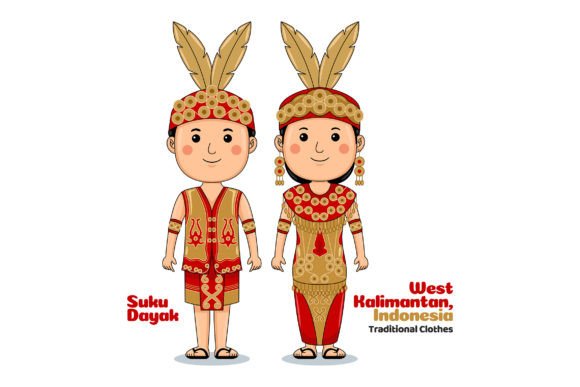
West Kalimantan, a province on the island of Borneo, is home to diverse ethnic groups like the Dayak and Melayu. Their traditional cloth, often produced through weaving and embroidery techniques, tells stories of identity, spirituality, and community. Common motifs include naga (dragons), symbolic flora like orchids and rattan, geometric patterns representing the natural environment, and motifs inspired by local mythology and daily life. Each shape and line carries meaning, often related to protection, fertility, harmony with nature, and social status. The traditional color schemes frequently utilize deep reds, earthy browns, blacks, and creams, derived from natural dyes, creating a visual language that is both bold and organic.
From Cultural Symbol to Design Asset
The transition of these traditional patterns from ceremonial garb to digital design assets is a natural evolution in a globalized, visual world. The core purpose of these motifs has always been communication—to convey identity, values, and stories. This purpose aligns perfectly with modern branding, which aims to communicate a company's identity, values, and story to its audience. The significance, therefore, lies in their authenticity and depth. Using these patterns connects a brand to a narrative of craftsmanship, heritage, and meaningful symbolism, offering a layer of substance beyond superficial aesthetics.
In practical terms, these designs are incredibly relevant for contemporary work. Their flat design style—a focus on clean shapes, clear lines, and two-dimensional representation—makes them inherently compatible with modern graphic design principles. This is not a coincidence; traditional art often simplifies complex ideas into recognizable icons, much like contemporary icons and logos do. This inherent compatibility means that a vector illustration based on a West Kalimantan naga motif can sit seamlessly alongside modern typography on a website banner or within a mobile app interface.
Creating Countless Variations for Branding and Illustration
The true power of using West Kalimantan traditional cloth patterns as a design foundation lies in their adaptability. Imagine possessing a collection of 100 high-quality vector illustrations, each deconstructing these traditional motifs into their core compositional elements. These could be standalone shapes like a geometric border, a single orchid flower, or the curve of a dragon's tail.
Unlimited Customization for Every Business Need
With such assets, you are not locked into a single look. The requirement that every shape can be easily resized and its color changed is crucial. For business branding, this allows for infinite variation. A financial tech startup might take a traditional geometric pattern and recolor it in sleek blues and grays for a trustworthy, modern feel on its landing page. A sustainable eco-brand could use the same floral motifs, keeping the earthy greens and browns, for its social media infographics. The shapes can be combined like building blocks: a border element can frame a product photo on a website, a motif can become a repeating background pattern on a promotional banner, and isolated icons can serve as illustrations in an educational blog post about Indonesian culture.
This flexibility addresses a common misunderstanding: that using traditional art is restrictive or might appear outdated. The opposite is true. When these elements are provided as editable EPS files compatible with Adobe Illustrator, they become raw material for contemporary creativity. You are not simply pasting an old image; you are using the DNA of a cultural pattern to generate something entirely new and brand-specific.
Practical Applications in Modern Digital Spaces
Let's explore concrete examples of how these illustrations fit into modern life, work, and daily activities.
- Business Branding & Website Design: The core logo, website headers, and favicons can incorporate simplified motifs. The visual consistency across a 5000 x 5000 pixel high-resolution JPG banner and a tiny social media avatar builds a strong, recognizable brand identity rooted in distinctive artistry.
- Social Media & Promotion: Engaging content needs unique visuals. Custom illustrations for posts about company values (using harmony motifs), product launches (using growth-related flora), or event promotions can be created quickly by combining and recoloring the provided vector elements.
- Infographics & Educational Content: For general readers or internal training materials, complex information about West Kalimantan's culture, a company's sustainable sourcing, or a historical timeline can be made approachable and engaging using these shapes as charts, icons, and visual anchors.
- Product Design & Merchandise: The patterns can be adapted for physical applications like packaging, apparel, and office stationery, creating a tangible connection to the brand's digital presence.
The technology aspect is straightforward: vector files (EPS) are the industry standard for scalable, non-pixelated design. They ensure that whether the illustration is on a huge billboard or a small smartphone screen, the quality remains perfect. This technical compatibility empowers both beginners, who can make simple color changes, and experienced designers, who can deconstruct and re-engineer the elements into completely new compositions.
Building a Broader Understanding of Cultural Design Resources
Viewing West Kalimantan traditional cloth through this lens helps readers build a broader understanding of how global cultural heritage can be a renewable resource for creativity. It shifts the perspective from seeing traditional art as static museum pieces to recognizing them as dynamic systems of visual language. This approach respects the origin by preserving the core compositional intelligence of the patterns while allowing them to evolve and find new purpose.
For the designer or brand manager, the message is clear: "Happy Designing, Happy Purchasing." It signifies that investing in such a resource—a pack of 100 vector illustrations inspired by this rich textile tradition—is not just buying images. It's acquiring a versatile, meaningful, and endlessly customizable design system. It provides context, story, and a unique visual edge that can differentiate a brand in a crowded market, all while offering the practical benefits of high resolution, easy editing, and total creative control. In the end, these patterns become more than decoration; they become a bridge between profound cultural wisdom and the innovative needs of the modern world.