Unlocking Visual Identity: Central Java Traditional Cloth as a Design Toolkit
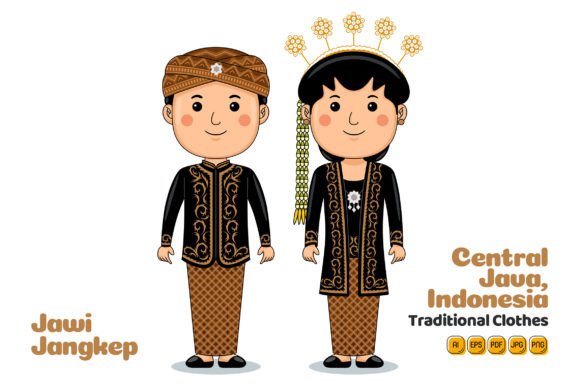
The rich cultural tapestry of Indonesia provides an endless source of inspiration, and the traditional cloth from Central Java stands as a particularly potent visual lexicon. These textiles, like the intricate Batik from Solo and Pekalongan or the geometric patterns of Lurik, are more than just fabric; they are encoded stories, philosophies, and aesthetics passed down through generations. For contemporary designers, marketers, and business owners, this heritage offers not merely a theme, but a complete, flexible system for building distinctive and resonant branding. The motifs and symbols inherent in Central Java Indonesia traditional cloth can be deconstructed, adapted, and recombined to create a unique visual language that speaks to authenticity, craftsmanship, and deep cultural value.
The Design Elements Within the Threads
To view these traditional cloths as a design toolkit, one must first understand their core components. Central Javanese Batik, for instance, is renowned for its specific patterns or motifs, each carrying meaning. The Parang motif, with its diagonal rows of knife-like shapes, symbolizes power and integrity. The Kawung, a geometric pattern of intersecting circles, often represents purity and order. Lurik cloth, characterized by its striped patterns, uses color and line sequencing that traditionally indicated social status or occasion. These are not random decorations; they are structured, symbolic design assets. When isolated as individual shapes—a ceplok (flower) element from Batik, a single stripe from Lurik, or a stylized element from the Sidomukti motif—they become scalable, editable vector graphics. Their inherent balance and artistic integrity make them ideal foundational units for digital design.
From Cultural Artifact to Brand Asset
The practical transition of these elements into modern branding begins with digitization. A collection of 100 vector illustrations derived from these patterns provides an immediate and vast resource. Each vector is a clean, flat-design shape, faithful to the original art but stripped of color constraints and physical limitations. This means the iconic isen-isen (filler patterns) of Batik can be resized from a tiny icon on a mobile app to a massive backdrop for a website banner without loss of quality. The colors can be changed entirely: a traditional brown and indigo Batik motif can be recast in vibrant brand blues and greens, or minimalist black and white for a sophisticated corporate feel. This adaptability is key for maintaining a coherent visual identity across vastly different mediums and campaigns.
Creating Countless Variations for Business Needs
The true power lies in combination and customization. With a library of these elemental shapes, a designer can create unique illustrations tailored to specific purposes. For social media promotion, one might combine a simplified garuda wing element with geometric Lurik stripes to create a dynamic background for a post about ambition and growth. For an infographic explaining company values, the orderly Kawung motif could frame each data point, subtly communicating stability and trustworthiness. On a landing page, a flowing semen (vine) motif can be adapted into a decorative border that guides the user’s eye down the page, enhancing user experience with culturally rooted elegance.
The applications are virtually limitless:
- Business Branding: Logo elements, brand pattern libraries, and corporate identity systems that feel authentic and deeply anchored.
- Infographics: Structural elements, icons, and borders that make data presentation visually compelling and meaningful.
- Social Media: Unique post templates, campaign visuals, and profile accents that stand out in a crowded feed.
- Promotional Materials: Flyers, brochure layouts, and email headers that convey quality and heritage.
- Website & Landing Page Design: Custom buttons, section dividers, background textures, and hero image overlays.
- Banner Advertising: Large-scale visuals that are instantly recognizable and culturally resonant.
- Other Illustrations: Custom artwork for presentations, product packaging, or educational materials.
The Technical Advantage: A Fully Editable System
A crucial consideration for professional use is technical compatibility and ease of customization. A resource provided in multiple file formats—AI for Adobe Illustrator, EPS for broader vector software, PDF for universal viewing, plus high-resolution JPG and PNG with transparent backgrounds—ensures seamless integration into any workflow. The flat design style is not only aesthetically clean but also inherently easier to edit, layer, and manipulate than complex, shaded illustrations. The ability to change the color of every single shape as required means the palette can align perfectly with existing brand guidelines or experiment with new seasonal campaigns. The high-resolution base (4000 x 5500 pixels) guarantees that any derivative work, whether for print or digital, retains crispness and professionalism.
Implementing a Culture-Driven Design Strategy
For businesses and creators aiming to implement this approach, the workflow is straightforward. Start by selecting motifs from Central Java Indonesia traditional cloth that align with your brand’s desired message—perhaps Truntum (a guiding star pattern) for an educational platform, or Mega Mendung (cloud motif) for a travel agency. Use the vector elements as building blocks. Combine a few to create a unique composite logo or a recurring brand pattern. Apply your chosen brand colors to the vectors. Then, deploy these customized illustrations across your touchpoints: your website’s footer might use a subtle pattern, while a promotional video uses animated versions of the elements. This creates a consistent, story-rich brand experience.
Key advantages of this strategy include:
- Authenticity: Connects your brand to a tangible, respected cultural heritage.
- Uniqueness: Moves beyond generic stock visuals to a proprietary visual system.
- Flexibility: One core asset library can generate visuals for all departments and needs.
- Scalability: From app icons to billboards, the designs maintain integrity.
- Cultural Resonance: Engages audiences, especially in Southeast Asia and globally, with recognizable artistry.
Observations and Considerations for Users
While the creative possibilities are vast, successful use requires thoughtful application. The patterns are culturally significant, so their use should be respectful and informed, avoiding superficial or miscontextualized appropriation. It’s advisable to understand the basic meaning of the motifs you choose. Furthermore, the flat, vector style, while versatile, may need complementary design elements (typography, photography) to create a balanced final composition. For educators and researchers, these illustrations can serve as excellent visual aids in teaching about Indonesian culture, where each digital element can be traced back to its physical textile origin. For hobbyists and small business owners, the ease of editing means no advanced design skills are necessary to produce professional-looking, unique graphics for a personal blog or online store.
In a digital landscape where visual distinctiveness is paramount, the structured artistry of Central Java’s traditional cloth offers a ready-made, yet infinitely adaptable, solution. It provides a bridge between profound cultural heritage and modern communication needs, enabling brands and creators to tell their stories with visuals that are not only beautiful but also imbued with history and meaning. By treating these motifs as a dynamic design toolkit, you unlock the ability to craft a visual identity that is coherent across all mediums, deeply resonant with audiences, and uniquely yours.