Beyond the Logo: How a Versatile Cartoon Character Set Unlocks Creative Branding
In today’s visually saturated digital landscape, establishing a memorable and adaptable brand identity is paramount. While a traditional logo serves as a cornerstone, modern businesses, educators, and creators often need more—a cohesive visual language that can tell stories, explain concepts, and connect with audiences across countless platforms. This is where a specialized asset, like a set of Artist Cartoon Character Logo illustrations, transcends being a mere graphic file and becomes a dynamic toolkit for visual communication. Imagine not just a single logo, but a library of 100 related, stylized vector characters and elements designed for infinite customization.
What Exactly Is a Cartoon Character Illustration Set?
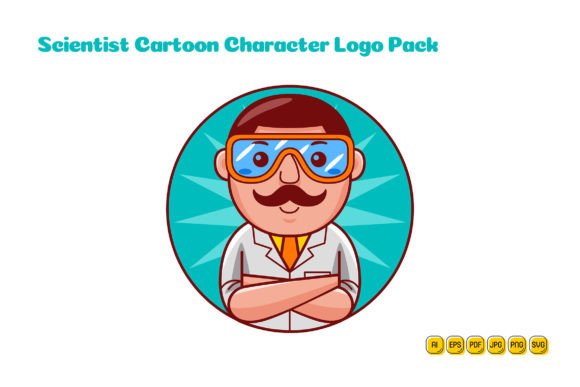
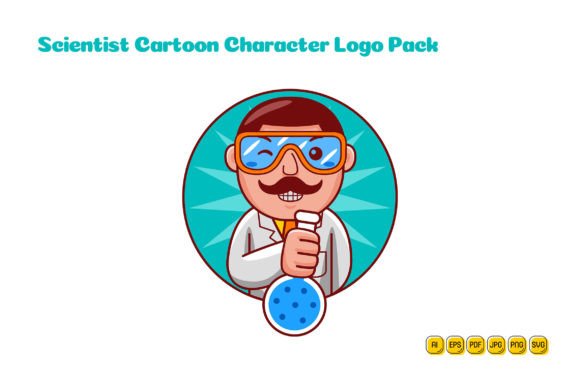
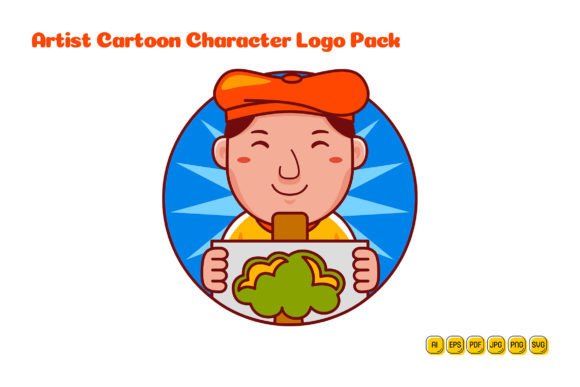
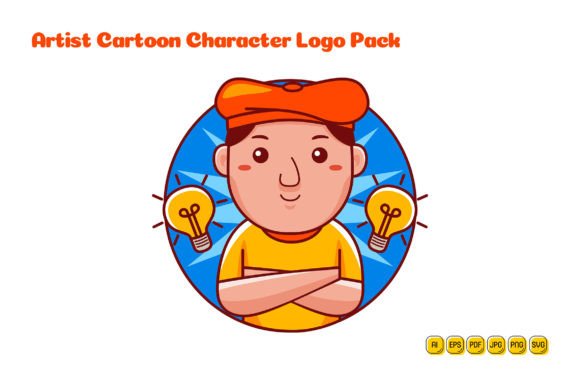
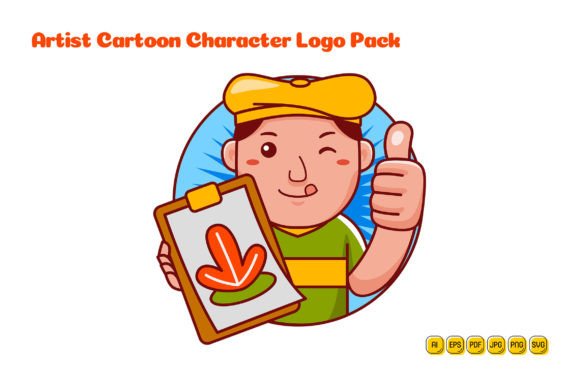
Let's start from the ground up. Unlike a single, static logo file, an illustration set is a comprehensive collection of coordinated graphic elements. The "Artist Cartoon Character Logo 04" mentioned serves as a conceptual example. It typically provides a foundational character or style, extended into a full suite of components. Each component—be it different character poses, expressive faces, accessories, background items, or symbolic objects—is created in a flat design style. This clean, minimalist aesthetic is not just trendy; it prioritizes clarity and scalability, making the visuals instantly recognizable and emotionally accessible.
The true power lies in the technical delivery: 100 vector illustrations. Vector graphics are not made of pixels but of mathematical paths. This means they can be resized from a tiny favicon to a massive billboard without any loss of quality, a crucial feature for multi-platform use. Provided in EPS files for Adobe Illustrator and complementary high-resolution JPG files (at sizes like 5000 x 5000 pixels), they cater to both vector editing software and quick-use scenarios. The set is a bridge between professional design software and practical, everyday marketing needs.
The Core Purpose: Flexibility as a Creative Engine
The primary significance of such a resource is its inherent flexibility. Its purpose is to enable countless variations. A business isn't locked into one image. For a marketing campaign, the character can be holding a product; for an internal infographic, it can be pointing to a key statistic; for a holiday social media post, its colors can be changed to festive themes. You can combine different elements and create your own illustrations. This transforms the user from a passive consumer of graphics into an active co-creator of their visual narrative.
This fits seamlessly into modern work and life. In business branding, consistency is key, but monotony is a risk. Using a unified set of adaptable characters maintains brand recognition while allowing messaging to evolve. For education and training, these approachable cartoon figures can simplify complex topics in infographics, making learning more engaging. In daily creative activities, from blogging to community announcements, they provide professional-quality art without requiring professional-level drawing skills.
Practical Relevance Across Key Applications
Let’s explore how this single asset finds practical relevance in diverse fields, demystifying where and why it’s used.
Business Branding & Marketing
A brand is a story. A static logo tells the title, but a character set can illustrate the chapters. For a startup, using varied character poses across its website, landing page, and promotional banners creates a lively, humanized presence. Customer service emails can include a friendly cartoon character to soften communication. Social media posts gain a unique visual signature that stands out in crowded feeds. The ability to change colors of each and every shape allows for campaigns aligned with seasonal colors or to highlight different product lines.
Information Design & Education
Infographics are tools for understanding. A common misunderstanding is that they require entirely custom art for each project, which is time-consuming and costly. With a versatile set, an educator or content manager can rapidly assemble visuals. For example, a character explaining a step-by-step process can be placed in different scenes with different tools across a series of slides. The flat design ensures the focus remains on the information, not on overly complex artwork.
Digital Content & Social Media
Social media thrives on fresh, consistent content. This illustration set acts as a visual content reservoir. You can create "quote graphics" where characters hold thought bubbles, announcement posts with characters celebrating, or educational snippets. The easy to edit and customize nature means a small business can tailor posts for different holidays or events without a designer on retainer, ensuring their visual identity remains cohesive month after month.
The Technical Advantages: Why Vector and High-Resolution Matter
For beginners, terms like "vector" and "high-resolution" might seem technical, but their practical impact is profound. Let's clarify.
- Vector (EPS Files): These are the editable source files. In software like Adobe Illustrator, every line, shape, and color is separate and adjustable. You can literally disassemble the character, change the hat's color independently from the shirt, or resize an element without blurring. This is essential for true customization.
- High-Resolution (JPG Files): At 5000 x 5000 pixels, these are ready-to-use images for almost any digital application. They provide immense detail, ensuring that even if you use a small portion of the image, it remains crisp. They are perfect for direct placement in websites, print-ready banners (at a reduced size), or video graphics.
The compatibility with professional software also means that experienced designers can integrate these elements into larger, more complex projects, while beginners can use simpler programs to manipulate the provided JPGs or learn basic vector editing.
Building a Broader Understanding: It’s a System, Not a Souvenir
A common assumption is that buying graphic assets is like buying a poster—you get one thing to use in one way. This illustration set challenges that notion. It is a visual system. Acquiring it is not a transaction for a souvenir, but for a lexicon of visual words you can arrange into countless sentences. It empowers the user to solve visual communication problems repeatedly.
This approach fits into the broader trends of technology and creativity: the democratization of design tools and the need for agile content creation. Not every organization has a full-time designer, but every organization needs effective visual communication. Resources like this bridge that gap, aligning with the principles of Helpful Content and E-E-A-T (Experience, Expertise, Authoritativeness, Trustworthiness) by providing users with a trustworthy, expert-level asset that enhances their own content's value.
From Purchase to Practice: The Journey of Customization
The process, Happy Designing, Happy Purchasing, is a cycle. Once you have the set, the creative journey begins. Imagine a local bakery. They use the main character as a mascot on their logo. For a "New Cupcake Launch" banner on their website, they take that character, resize it, place a cupcake in its hand (from another element in the set), and change its apron color to match the cupcake's frosting. For a social media post about "Meet the Baker," they combine the character with a whisk and oven graphic. For a printable flyer about a baking class, they create a simple infographic using the character in different poses to show steps. All these visuals are unmistakably part of the same brand family.
This versatility ensures the asset remains relevant. As the business grows into new areas—perhaps selling baking kits or starting a YouTube channel—the same visual toolkit adapts, saving money and maintaining a strong, familiar identity. It’s an investment in a flexible, future-proof visual strategy.
Conclusion: Empowering Communication with Creative Tools
Understanding a topic like an Artist Cartoon Character Logo illustration set is about seeing beyond the surface. It’s not just about buying art; it’s about acquiring a capability. From its foundation in scalable vector technology to its practical application across branding, education, and digital marketing, such a resource empowers individuals and businesses to communicate more effectively, more consistently, and more creatively. By clarifying its purpose as a system for generating variations, we recognize its role as a modern solution for anyone looking to enhance their visual storytelling with clarity, cohesion, and endless creative potential.